
Signs Your Gut Is Crying For Help: 12 Clues You Might Miss

Some of the links in this post might be affiliate links. This means that if you click on the link and make a purchase, I’ll receive a small commission – at no extra cost for you, which helps me cover the costs for this blog.Most of us don’t think twice about our gut – until something goes wrong. Maybe it’s bloating after every meal, skin issues that won’t clear up, a gut-wrenching anxiety, or just a weird, nagging feeling that something isn’t right. Your gut might be whispering (or screaming) for help, and the signs aren’t always obvious.
In this post, I’m breaking down 12 often-overlooked signs that your gut may be out of balance. Whether you’re dealing with chronic inflammation, IBS, leaky gut, gastritis, or something you haven’t been able to name yet, this list will help you start connecting the dots.
Not sure what’s actually going on with your gut?
Download my FREE Gut Health Symptom Assessment to identify imbalances like leaky gut, IBS, gastritis, or SIBO and take the proper next steps!
Signs Your Gut Is Crying For Help: 12 Clues You Might Miss
1 - You Bloat After Almost Every Meal
Abdominal bloating and distension are two of the most commonly reported gastrointestinal symptoms. It’s not normal to feel 6 months pregnant after eating lunch. If it happens more than occasionally, it’s worth exploring what your gut is trying to tell you. If your stomach expands like a balloon after eating (even “healthy” meals), your gut could be struggling to break down food. Bloating can be a sign of:
Imbalanced gut bacteria (dysbiosis)
Damaged or inflamed stomach lining
Food sensitivities
Sluggish motility
An irritable nervous system
If you experience gas and bloating a suspicious amount, consider bringing this up to your doctor at your next visit.
2 - You’re Constantly Tired (Even After Sleeping)
If you’re getting eight or more hours of sleep and still waking up exhausted, the problem might not be your schedule…how tired you feel might be due to your gut. While most people think of digestion as your gut’s only job, it's also deeply involved in energy production and nutrient metabolism. When your gut is inflamed, imbalanced, or underperforming, it can start to interfere with the very systems that keep you energized.
Think about it…if your gut isn’t able to break down the food you eat, then how can your body get the nutrients it needs from it? For instance, damaged gut could be having trouble absorbing iron, B vitamins, and magnesium, which are essential for cellular energy. Additionally, chronic inflammation in the gut can also create a constant energy drain on the body, keeping your immune system activated and making you feel tired all the time. For these reasons, persistent fatigue may be a result of something going on with your digestion.

3 - You React to Everything You Eat
One day it’s eggs. The next it’s garlic. Then suddenly, even spinach seems to cause a reaction. If you feel like your body has turned against everything you put on your plate, it’s not your imagination - and it’s not “just in your head.” This pattern is often a red flag for leaky gut syndrome, also known as intestinal permeability.
When the gut lining is damaged (often due to chronic stress, inflammation, or poor diet), it can develop microscopic gaps in its highly-selective tight junctions. These gaps allow undigested food particles, toxins, and pathogens to "leak" into the bloodstream. When this happens, your immune system detects these substances as invaders and goes into defense mode - again, triggering an inflammatory immune response. Over time, this repeated immune activation leads to symptoms like:
Diarrhea, bloating, nausea, and abdominal pain
Widespread food sensitivities
Chronic inflammation
Histamine intolerance and allergy symptoms (itchiness, rash, brain fog, etc.)
If you’re experiencing these symptoms, it may be worth researching leaky gut (intestinal permeability) and discussing it with a healthcare professional.
Sounding familiar?
Download my FREE Gut + Mood Tracking Toolkit and start uncovering patterns in your symptoms now.
4 - You Have Skin Issues (Acne, Eczema, Rashes)
Your skin is often a mirror for what’s going on internally, and the gut-skin connection is a lot stronger than most people think.If you’re dealing with skin issues like persistent acne, eczema, psoriasis, rosacea, or random rashes that seem to come out of nowhere, your gut health may be the root cause.
When the gut microbiome is imbalanced or the intestinal lining is inflamed, your body may struggle to detox properly. Instead of filtering out toxins efficiently through the liver and gut, the body reroutes them to the skin, which acts as a secondary detox pathway. This can result in weird rashes and itchiness that can build up in the skin, which can explain random breakouts and reactions. Conditions like eczema, psoriasis, and acne are often linked to:
Gut dysbiosis (overgrowth of bad bacteria or yeast)
Food sensitivities and leaky gut
Histamine overload
Poor liver detox pathways
Even if you're using all the right skincare, internal inflammation can still override your efforts. True skin healing often starts by healing the gut (and hydrating properly!).

5 - You Get Brain Fog or Feel “Out of It”
If you often feel mentally sluggish, spaced out, or like you're walking around in a daze, your gut could be the cause. Brain fog is a common but overlooked sign of gut imbalance…especially when inflammation, dysbiosis, or leaky gut are involved.
When your intestinal lining becomes compromised, inflammatory compounds and toxins can slip into the bloodstream and affect brain function. Because of the gut-brain connection, what’s happening in your digestive tract directly impacts your mental clarity, memory, and ability to focus. Plus, if digestion is compromised, then that may be affecting your hydration levels too, which greatly affect brain function. This foggy feeling may fluctuate day to day, especially after eating trigger foods or during periods of stress.
If you’ve ruled out sleep issues or hormonal imbalances and still feel like your mind isn’t sharp, there is a great chance that your gut is involved.
6 - You’re Moody, Irritable, or Anxious
According to the National Alliance on Mental Illness (NAMI), over 40 million American adults (about 20%) have an anxiety disorder, and 15.5% of American adults suffer from depression. Which isn’t surprising…in a world with 24/7 screen time, no emphasis on work-life balance, and even everyday stressors like driving anxiety, it can be hard to remain mentally and emotionally regulated these days.
This is where it’s important to know that the gut and brain are in constant communication via the gut-brain axis, a two-way superhighway of nerve signals, hormones, and chemical messengers. And it does go both ways: When your gut is inflamed, leaky, or imbalanced, it sends distress signals upward, directly affecting your cognitive function, memory, moods, and mental clarity.
On top of this, stress puts us in fight-or-flight which changes how our body prioritizes functions like digestion, which long term can have negative effects on the gut. Specifically, it slows down blood flow going to your digestive organs and reroutes it to your skeletal muscles and organs like the heart, lungs, and brain. This is because your body needs to reserve energy to deal with the threat it’s sensing, even if the perceived danger is in your head!
Looking back at my own life, I personally have always been sensitive to food when it comes to my mood. When I’m hungry, the irritability is real, yet the second I have a bite of bread I’m in the best mood in the world :D It also makes sense now looking at the progression of mental health diagnoses like depression anxiety, then followed by digestive disorders. Patterns!!
read more on the gut-brain axis
Discover how your mental and emotional state directly affects digestion, and the simple steps you can take to start healing now
7 - Your #2 is…all over the place
Let’s be real…your poop says a lot about your gut health. It might not be glamorous, but if your bowel movements aren’t consistent, your gut is likely crying for help.
Some red flags include:
Changes in color and/or consistency
These patterns can point to anything from SIBO, IBS, or inflammation of the GI lining, to sluggish bile flow or dysbiosis. Even mild irregularity, when chronic, can signal underlying imbalances in digestion, enzyme function, or your gut flora. Keeping a log can be very useful in tracking your symptom patterns and learning how your body reacts to certain foods.
8 - You Get Sick More Than Usual
If you’re constantly catching colds, battling infections, or struggling with allergies, your gut could be to blame. Over 70% of your immune system lives in your gut-associated lymphoid tissue (GALT) which means your microbiome and intestinal lining are your first line of defense. This isn’t talked about enough…your gut literally has nearly three-quarters of your body’s lymphoid tissue, and most people are focused on taking their daily over-the-counter vitamin C supplement.
When your gut barrier is compromised, your immune system can’t respond properly. It might overreact (autoimmunity, rashes, allergies), underreact (frequent infections, poor wound healing), or stay chronically activated (inflammation, fatigue).
As a result, your body might be using its energy reserves to be fighting things chronically, leaving little left to fight the average cold. If you’re someone who seems to “always be fighting something,” strengthening your gut might be the immune upgrade you actually need. Try adding more diverse fruits and vegetables to your diet to boost your system with antioxidants like flavonoids and polyphenols!
9 - You Have Bad Breath, a Coated Tongue, or Weird Taste in Your Mouth
If you feel like you need to brush your teeth more than usual, or like your tongue is needing some extra TLC, that might be an indicator that something is off in your digestive system.
Symptoms like white or yellow-coated tongue, metallic or sour taste, or bad breath even after brushing can indicate poor enzyme output, imbalanced oral and gut bacteria, or yeast overgrowth like Candida. Since digestion begins in the mouth, these clues are often early signs that your gut isn’t working efficiently and might need some help.

Looking for real recipes that make getting probiotics easy + delicious? Try the 30 Days of Gut-Healthy Soups Recipe Book — packed with goodness in one new recipe for every day of the month!
10 - you have an insatiable craving for Sugar (or Salt)
Cravings are often dismissed as "willpower issues," but in reality, they're powerful signals from your gut and nervous system.
Craving sugar may indicate issues like a bacterial imbalance (some gut microbes feed off sugar and send signals to your brain for more), blood sugar swings (often triggered by inflammation or poor fat/fiber intake), and even emotional stress, which depletes dopamine and makes you reach for fast hits of pleasure.
Meanwhile, salt cravings can be your body’s way of asking for minerals like sodium, potassium, magnesium); adrenal support (your stress response system needs salt to function); and hydration correction, especially if you’re inflamed or detoxing.
If your cravings are intense or feel like they control you, it’s worth assessing your gut and mineral status before blaming your brain.

11 - Your Appetite Feels Off
Do you swing between feeling ravenous and nauseated? Or maybe you never really feel hungry but eat anyway, because you know you should? Your appetite is regulated by a complex mix of hormones (ghrelin, leptin), blood sugar, gut bacteria, and nervous system signaling. When something is off, it can lead to sudden loss of appetite, intense or unusual cravings, no satisfaction from meals, and fear around food (especially post-gastritis or IBS).
An imbalanced gut often struggles to properly communicate with the brain, which makes it hard to interpret what your body actually needs. Regulating your gut can help bring back predictable hunger cues and a safer, more intuitive relationship with food.
12 - You Don’t Feel “Safe” in Your Body
This one is a little harder to put into words, but it might resonate if you’ve been silently struggling with chronic stress, discomfort, or disconnection.
When your gut is inflamed or your nervous system is dysregulated, it can lead to the onset of depression and/or anxiety - like your body isn’t a safe place to be. You might notice things like:
A constant low-level sense of tension
Chest tightness or shallow breathing
Feeling “on edge” without a clear reason
Internal buzzing or restlessness
Difficulty relaxing, even when nothing’s wrong
A gut feeling that something is just… off
These symptoms aren’t all in your head. They’re the result of your gut-brain axis (the communication loop between your digestive and nervous systems) operating in survival mode. When this system is inflamed or out of sync, it can impact your mood, your hormones, your immune response, and your ability to feel calm and grounded.
the gut-brain what?
I’ve written a full post on how the state of your nervous system could be behind your mysterious gut symptoms
Final Thoughts
Don’t ignore the whispers! Your gut is your second brain - when it’s off, everything else feels off too. If you’re experiencing even a few of these symptoms regularly, it might be time to pause and listen.
You don’t have to do it all at once. Start with one small change - that’s all you can do, anyway! The Better Gut Club is here to help you along the way :)
Want to Know What Your Symptoms Actually Mean?
If you’re nodding along to this list but still wondering what’s really going on, the first step is understanding your unique symptom patterns and what they’re trying to tell you.
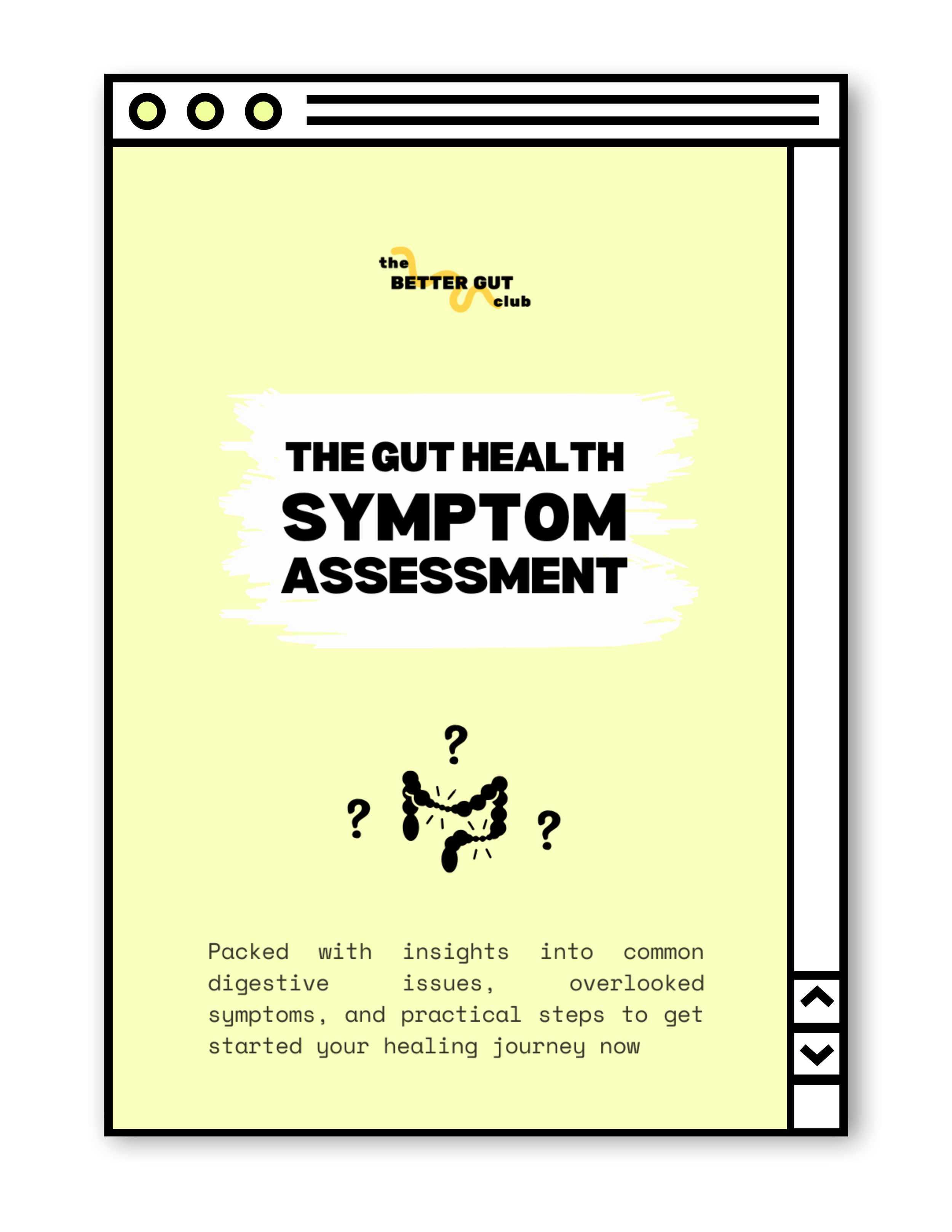
Download my FREE Gut Health Symptom Assessment to start decoding your gut issues with clarity!
Identify patterns in your symptoms
Pinpoint possible root causes + disorders
Feel empowered when talking to your practitioner or creating a healing plan
Want a full 14-day roadmap with easy, gut-friendly meals?

My 14-Day Gut Reset Recipe Book includes 50+ healing recipes, all designed to calm inflammation and support microbiome diversity.
into herbal healing?
check out my free gut + nervous system herbs cheat sheet

→ 24 medicinal herbs with important properties + uses
→ Color-coded labels for clear referencing
→ Specifically curated to jumpstart your gut health journey
more on the blog
⬇










I am not a medical professional, nor do I claim to be. The information provided is not intended to be a substitute for medical treatment, but for educational purposes only. Please consult your medical care provider before using herbal medicine, particularly if you have a known medical condition or if you are pregnant or nursing.

Your gut isn’t just where food is digested - it’s where emotions are felt and processed. This article explores the deep connection between mental stress and digestive issues, sharing personal insight and science-backed truths about how emotional health impacts gut function.